Tag: scottish elections

Group of swimmers smiling to the camera. The are sitting poolside with their club's purple t-shorts on. A few of them are holding a sign which says, I support the Scottish Disability Sport's call to action to remove barriers to physical activity and sport.

Parties in Power: What Shapes Priorities

By Mark Gaffney, Head of Policy at Scottish Disability Sport 

While whichever party is in control undoubtedly frames legislative direction, influence in Scotland is more nuanced than simple majority rule.

  • The governing party (or parties) set budgets, shape national strategies (such as sport and health frameworks), and control most legislative time.
  • Opposition parties influence through First Minster Questions (FMQs), scrutiny, amendments, and committee work.
  • Smaller parties and individual MSPs can exercise disproportionate influence where parliamentary margins are tight.

For disability sport, this creates several practical realities:

  1. Policy Windows Are Political

Investment in inclusive sport and physical activity often aligns with broader agendas—public health improvement, tackling inequality, or community regeneration. Engagement is most effective when framed within those priorities rather than positioned as a standalone “special interest.” Historically – and indeed, currently – the challenge has been to get the Scottish Government and opposition parties to see sport as a priority area. This remains the central challenge for SGBs and other associated organisations in Scotland.  

  1. Cross-Party Support Matters

Disability sport rarely divides along party lines, but it can fall between them if not actively championed. Building relationships across parties increases the likelihood that:

  • Issues are raised in debates regardless of who is in power
  • Amendments are supported during budget negotiations
  • Committee inquiries include disability-specific evidence
  1. Committees Are Critical

Much of the meaningful work happens away from headline debates. Committees covering health, education, and social justice are key sites where disability sport concerns—such as access, funding equity, or data gaps—can be formally examined. This is why evidencing impact through data, research and insights is important.


Engagement Through a Disability Sport Lens

If the structures of power are complex, so too must be the approaches to engagement. Disability sport provides a particularly strong framework because it connects visibility, participation, and rights.

  1. From Storytelling to Evidence

Personal stories matter—but on their own they are often insufficient to drive policy change. Effective engagement pairs lived experience with:

  • Participation data (who is excluded and why)
  • Cost-benefit analysis (e.g. preventative health savings)
  • Comparisons with non-disabled participation rates
  • Strength in numbers – join forces with organisations with similar aims and objectives

MSPs—especially those in committees—respond to evidence that can shape policy, not just illustrate gaps.

  1. Local Anchoring, National Framing

A wheelchair user unable to access a local sports hall is a constituency issue. But when that story is repeated across regions, it becomes a national policy failure.

The most effective engagement strategies:

  • Start with constituency MSPs to resolve or highlight the issue
  • Escalate through regional MSPs and party spokespeople
  • Feed into committee evidence, cross-party groups and national campaigns

This layered approach mirrors how decisions are made.

  1. Aligning With Existing Policy Agendas

Disability sport gains traction when linked to broader government priorities. For example:

  • Health: Positioning participation as reducing long-term NHS demand
  • Education: Highlighting inclusive PE and transitions into lifelong sport
  • Economy: Emphasising employment pathways within sport for disabled people

This alignment makes it harder for policymakers to treat disability sport as optional.


Barriers to Engagement Still Persist

Despite structural opportunities, there remain persistent barriers:

  • Accessibility of political processes: Meetings, consultations, and documents are not always accessible or inclusive (although improvements have been made recently)
  • Capacity of disabled people’s organisations: Many are under-resourced and cannot sustain ongoing engagement
  • Fragmentation: Sport, health, and disability policy often operate in silos

These barriers mean that opportunities for influence are unevenly distributed—and often exclude those most affected.


What Should Change in This Parliamentary Term

If the post‑election period is to deliver meaningful progress for disability sport, three shifts are needed:

  1. Proactive Outreach by MSPs

Rather than relying on organisations to initiate engagement, MSPs—both constituency and regional—should actively build relationships with disability sport groups and participants, so feel free to hold them accountable for doing so.

  1. Embedding Disability Sport in Scrutiny

Committees should consistently examine inclusion within sport, not as an occasional topic but as a recurring accountability issue.

  1. Supporting Participation in Decision-Making

This includes:

  • Funding for representative organisations
  • Accessible consultation processes
  • Paid opportunities for disabled people to contribute expertise


A System That Requires Navigation—and Change

The Scottish Parliament offers multiple routes to influence, but they are not always obvious or equally accessible. For those working in disability sport, success depends on understanding how constituency advocacy, regional influence, and party dynamics interact.

The challenge after this election is not simply whether disability sport appears in policy documents—it is whether disabled people can consistently shape those policies at every level.

Because real inclusion in sport is not achieved on the field, court or sports hall alone. It is built in how decisions are made, who is heard, and whether power is genuinely shared and proportionate.


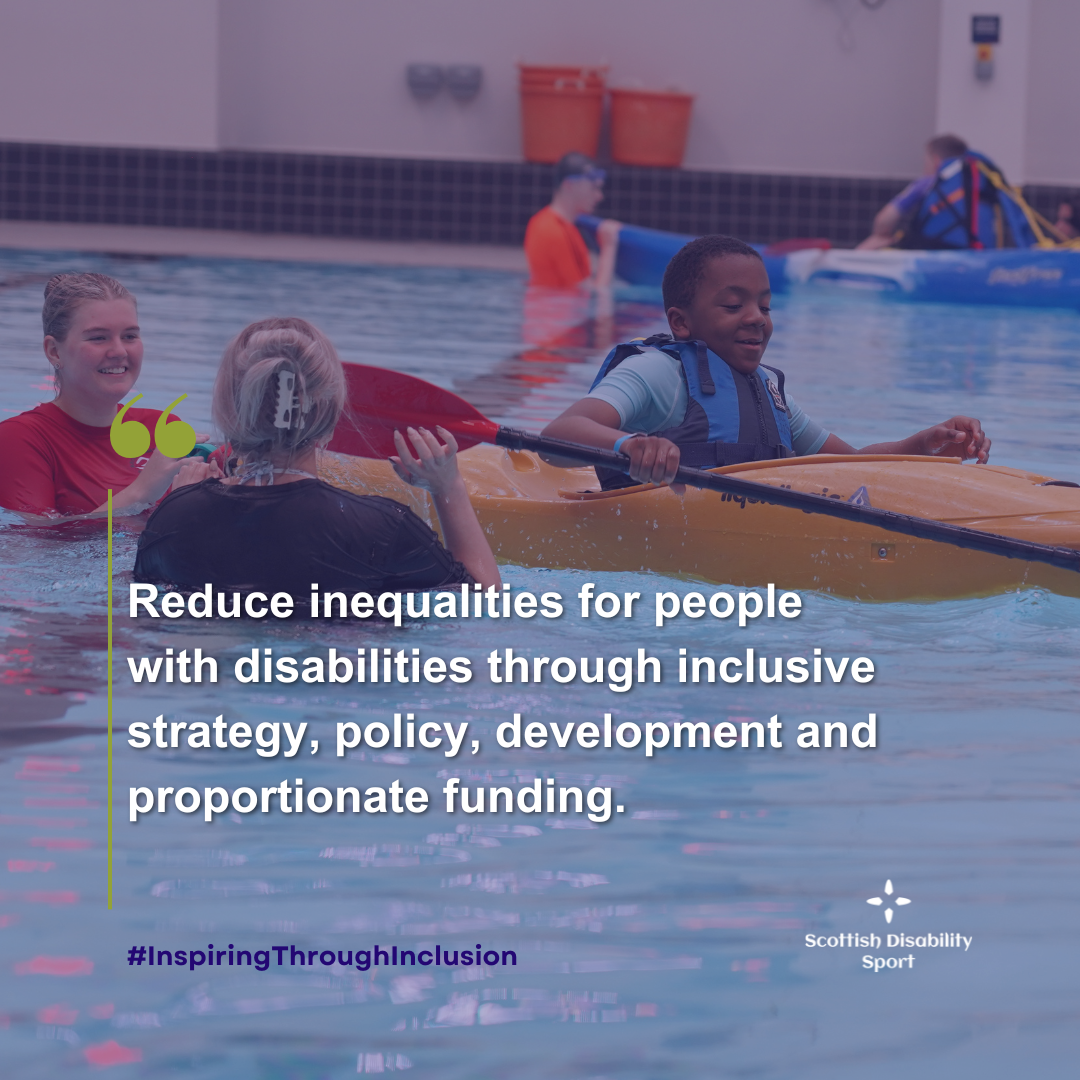
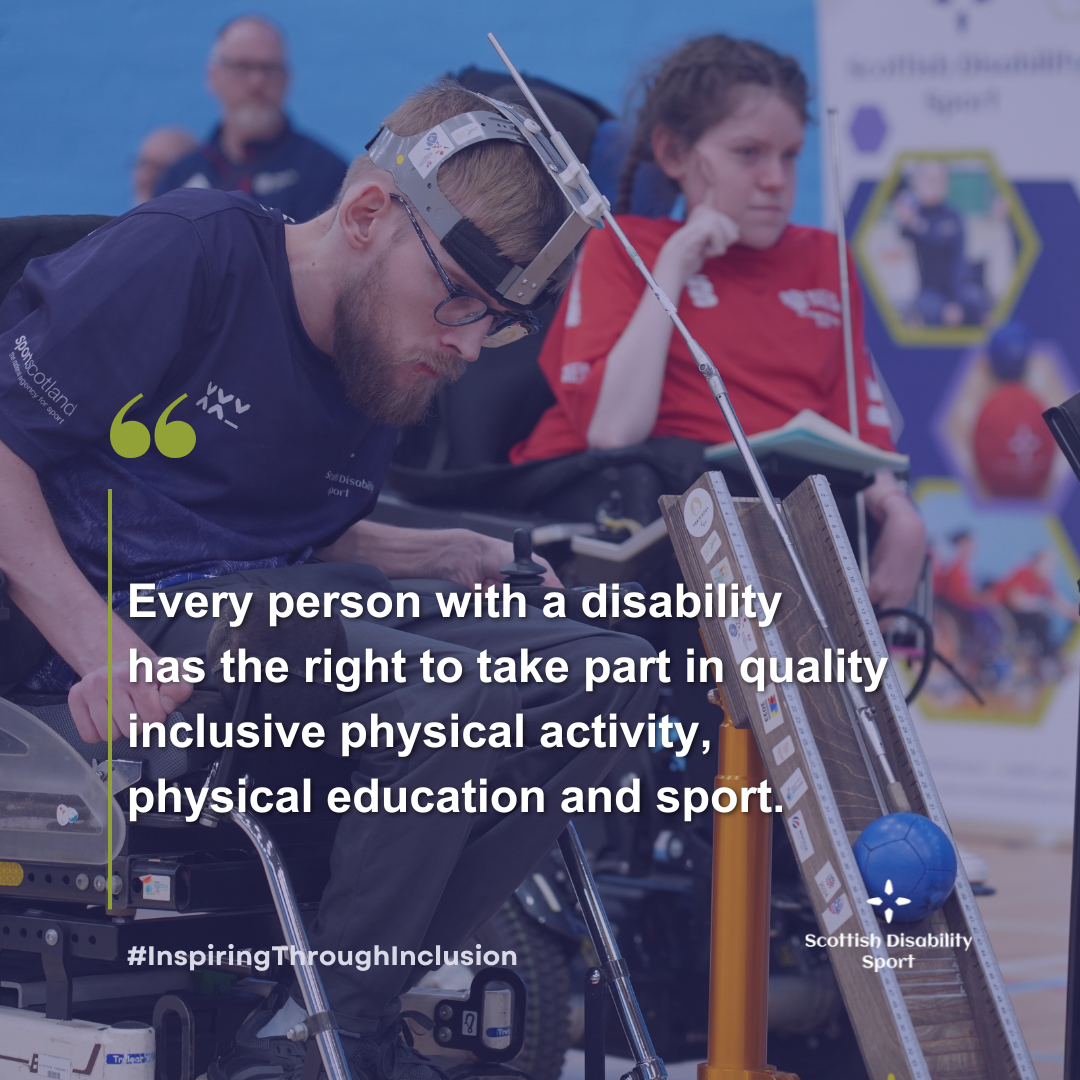
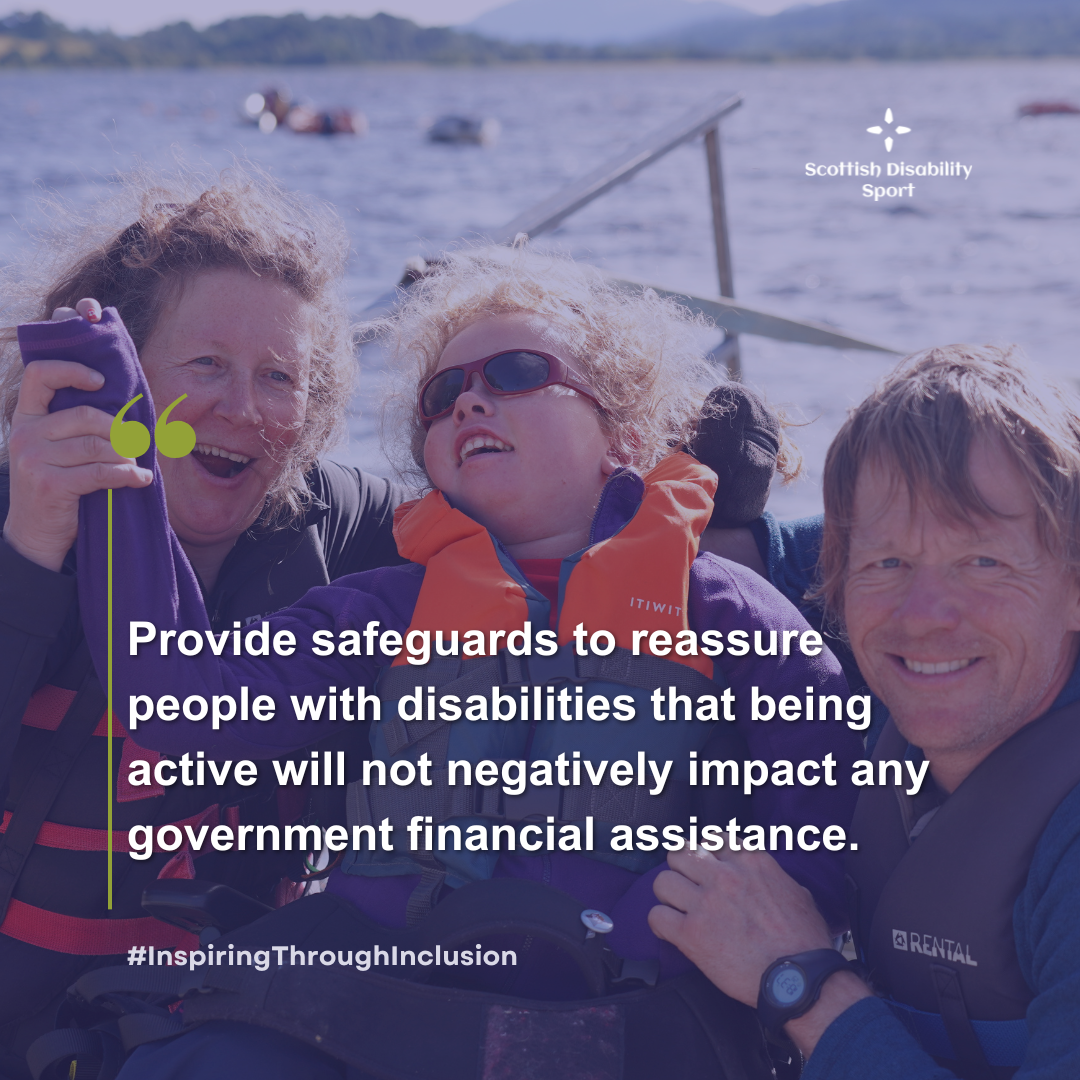
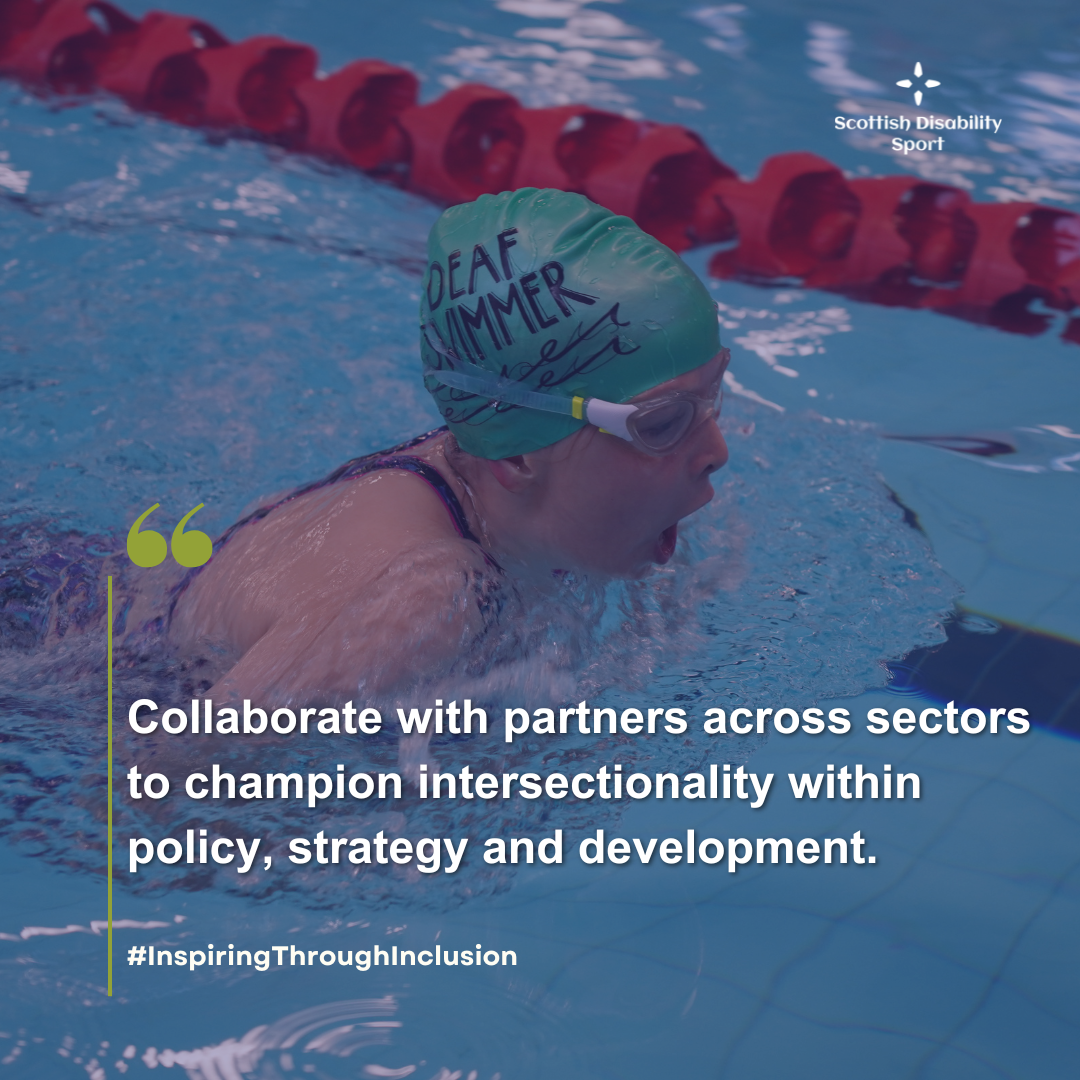
Scottish Disability Sport has launched a four-point Call to Action that calls on organisations across Scotland to take urgent action to remove the significant barriers faced by people with a disability in accessing sport and physical activity. 

The four-point Call to Action follows the publication of a new national survey by SDS, which highlights the ongoing inequalities experienced by people with a disability and the impact this has on their quality of life.  

Key actions called for include:

  • Plan to Include
  • Deliver an inclusive whole system approach 
  • A benefits and social care system that equips individuals to be active 
  • Champion intersectionality through a person-centred approach 

More information about the Call to Action, can be found via this link: https://scottishdisabilitysport.com/wp-content/uploads/2025/09/BC-and-AGM-CTA-Presentation_PDF-for-Website.pdf 

View the key findings of the National Survey can be found via this link: https://scottishdisabilitysport.com/wp-content/uploads/2025/07/SDS-National-Survey-Findings-CEO-Circulation.pdf.

Photo of adults and young children all together holding up signs that say they support the Scottish Disability Sport Call to Action to remove barriers to physical activity and sport.

After the Election: Will Disabled People Be Heard?

After the Ballots Are Counted: A Moment of Reckoning for Disabled People in Scotland

By Mark Gaffney, Head of Policy at Scottish Disability Sport 

The Scottish election has come and gone, and as manifestos are shelved (opinion is divided on the merits of manifestos) and negotiations begin, there is a familiar risk that disabled people once again become an afterthought rather than a priority. Yet this moment matters. How Scotland chooses to govern now will shape whether people with disabilities experience public life as something done with them—or something that continues to happen around them.

Across sport, health, education, social security, and civic engagement, disabled people have been promised inclusion for decades. What they have instead often encountered is fragmented provision, and policies that sound progressive but fail in practice.

Scotland is rightly proud of its sporting culture, but disabled people still face structural barriers to participation. Emphasis can often be placed on elite Parasport or “inspirational” stories, while grassroots provision struggles for sustainable funding. Accessible facilities remain few and far between, local engagement opportunities are fragile and sporadic, and transport continues to be a barrier in rural and deprived communities.

A post‑election reset should recognise sport as a public health and human rights issue, not a discretionary extra. Investment must prioritise inclusive local clubs and infrastructure, accessible leisure centres (both physically and from an affordability perspective), and paid roles for disabled coaches and leaders. Disabled people should not be guests in Scotland’s sporting system; they should help run it.    


Health: Closing the Gap, Not Managing It

Disabled people in Scotland experience poorer health outcomes, shorter life expectancy, and more difficulty accessing care than non‑disabled people. Long waiting times for assessment and treatment, particularly in mental health and neurodevelopmental services, are not abstract policy failures—they shape people’s entire lives.

The next parliamentary term must move beyond managing demand and focus on redesigning services around disabled people’s realities. That means co‑produced services, continuity of care, and genuine parity between physical and mental health. It also means recognising the social determinants of health: poverty, housing insecurity, and digital exclusion cannot be separated from health policy.


Education: Inclusion That Works in Practice

Scotland’s commitment to inclusive education is well established in principle, but far less secure in delivery. Many disabled children and young people still struggle to get the support they are legally entitled to. Families are often forced into adversarial processes simply to secure basic adjustments, while staff face rising workloads and shrinking resources.

Post‑election, there is a pressing need to rebuild trust. This requires properly funded additional support for learning, consistent national standards, and a renewed focus on transitions—from school to further education, training, or work. Disabled learners should leave the education system with qualifications, confidence, and genuine choices, not exhaustion from constant battles.


Benefits and Social Security: Dignity Must Mean Security

Scotland’s devolved social security system was founded on the language of dignity, fairness, and respect. For many disabled people, however, insecurity remains the defining feature. Assessments can still be stressful and opaque, and financial support often fails to keep pace with the real costs of disability, particularly during a cost‑of‑living crisis.

The next government has an opportunity—and an obligation—to strengthen trust in the system. That means reducing reassessments where needs are unlikely to change, ensuring advice and advocacy are available, and aligning benefit levels with the actual cost of accessible living. Dignity is not a slogan; it is felt in whether people can heat their homes, travel to appointments, or participate in community life.


Engagement and Democracy: Nothing About Us Without Us

Perhaps the most important post‑election test is whether disabled people are meaningfully involved in shaping decisions. Consultation is too often late, limited, or inaccessible. Engagement cannot be reduced to surveys and stakeholder events; it must involve ongoing power‑sharing.

This includes accessible voting and political processes, properly resourced disabled people’s organisations, and paid opportunities for participation. Lived experience is expertise, and Scotland cannot afford to keep sidelining it. Policies developed without disabled voices consistently fail to deliver.


A Choice After the Election

The election has produced a Parliament with renewed authority to act. The question is whether it will choose to embed disability equality across all portfolios or continue treating it as a specialist concern. Disabled people do not live single‑issue lives. Sport affects health; education affects employment; benefits affect participation. These connections demand joined‑up thinking and political courage. Taking an intersectional approach is critical to make progress for the most underrepresented in our sport and physical activity settings.

Scotland now faces a choice. It can tinker at the edges, celebrating small improvements while inequality persists. Or it can commit, decisively, to a Scotland where disabled people are visible, valued, and empowered—not as beneficiaries of goodwill, but as equal citizens. The ballots may be counted, but for disabled people, the real test of this election is only just beginning.


Scottish Disability Sport has launched a four-point Call to Action that calls on organisations across Scotland to take urgent action to remove the significant barriers faced by people with a disability in accessing sport and physical activity. 

The four-point Call to Action follows the publication of a new national survey by SDS, which highlights the ongoing inequalities experienced by people with a disability and the impact this has on their quality of life.  

Key actions called for include:

  • Plan to Include
  • Deliver an inclusive whole system approach 
  • A benefits and social care system that equips individuals to be active 
  • Champion intersectionality through a person-centred approach 

More information about the Call to Action, can be found via this link: https://scottishdisabilitysport.com/wp-content/uploads/2025/09/BC-and-AGM-CTA-Presentation_PDF-for-Website.pdf 

View the key findings of the National Survey can be found via this link: https://scottishdisabilitysport.com/wp-content/uploads/2025/07/SDS-National-Survey-Findings-CEO-Circulation.pdf.

Paralympian Stephen MacGuire and Great Britain’s wheelchair rugby athlete Gemma Lumsdaine, head the Scottish Parliamentary photocall on the stairs inside the Scottish Parliament. MSP gather on the stairs with a selection holding sporting equipment (boccia balls, football, tennis racquet, basketball) whilst others hold signs pledging support for the SDS Call to Action.

Break the Barrier: Scotland’s 2026 Manifestos

Break the Barrier: What Scotland’s 2026 manifestos mean for disability sport (and why it matters now)

By Mark Gaffney, Head of Policy, Scottish Disability Sport

Yesterday, I covered why making Scotland more inclusive and accessible is the right thing to do if we want to improve our nation’s health outcomes. Today we look at each of the main political parties in Scotland and what their manifestos are saying about their commitment to action.

For a wider take on how sport is covered in the party manifestos I would thoroughly recommend Malcolm Dingwall Smith’s insightful pieces reviewing each of the major parties and their commitment to action on sport.

The detail below will be more related to how each party intends to improve the lives of those with a disability. If we’re serious about health, education, social care, and equality, diversity and inclusion (EDI), then we have to be serious about disability sport and physical activity—not as an add‑on, but as a system outcome.

Scottish Disability Sport’s Call to Action is built on lived experience and evidence. It shows a profound participation gap: over 90% of disabled respondents do not meet recommended physical activity levels, even though 95% believe being active benefits their mental health and wellbeing. People aren’t opting out; they’re being locked out—by affordability, transport, inaccessible facilities, inconsistent support across systems, and fear that being active could jeopardise financial support.

SDS’ message to every party is clear: inclusion is a rights issue under UNCRPD Article 30, and it requires cross‑government delivery (sport, health, education, local government, social care, transport and EDI working together).

Below is an SDS‑lens summary of what the major parties’ 2026 Scottish manifestos offer—and our take on what needs strengthened.

Overall, it would be fair to say that sport is not a strong theme throughout and suffers in comparison to other areas such as Culture which sees a continuation and extension of funding levels to the tune of £100m with a further £50m uplift within 5 years. With green shoots of progress being seen in sport speaking as a collective voice, then this should be the least the sector aspires to. It also should be said that politicians need to absolutely do their bit too and commit to promises that were made. The doubling of the sports budget that was promised in the last government didn’t ever materialise, despite the welcome £40m uplift following the last budget. Figures can often be misleading and much of that £40m uplift is one-off funding – which will undoubtedly do good – but doesn’t ultimately give people the best chance to sustain, consolidate and develop impact over time.


What the parties are saying (through a disability sport lens)

Let’s start with the party that has been in power for nearly twenty years. The Scottish National Party (SNP) are the outgoing government and all up to date polling would suggest that they are set to continue to be the largest party at Holyrood – although, they may ultimately fall short of the majority that John Swinney would want. Whether a coalition is formed with another pro-independence party (i.e. the Greens) remains to be seen.


SNP: big on cost of living and NHS. Sport needs to be named, funded, and measured.

With an obvious overarching fundamental push for independence, the SNP manifesto launch messaging cites 50 steps it will take which features amongst them

  • a commitment to extra help with cost of living
  • new school breakfast clubs
  • summer of sport
  • public sector reform
  • increased Additional Support Needs support.

There is a clear focus on tackling the cost of living and commitment to the NHS access with some commitment to a preventative approach through early intervention and prioritising self-management of care through a new app.

The usual hallmarks of an SNP administration are there with state-led support for university fees, prescriptions, school meals, dental and eye checks and winter payments for families with disabled children offset by higher tax rates for the highest earners – caveated by their contention of the “fairest and most progressive tax system in the UK”.

Continuing their aims of eradicating child poverty, the SNP will maintain the Scottish Child Payment and introduce Bright Start Breakfasts across all primary and special schools – ensuring a healthy start to the day for kids with breakfast and play amongst friends.

Further to this a Digital Inclusion Action Plan and a promise to tackle the cost of disability with the much sought after third-sector support for multi-year settlements for Disabled People’s Organisations (which ones exactly, we do not know but likely to be connected to the delivery of the Disability Equality Plan – £2.5m of additional investment) and a Transition to Adulthood Guarantee for all young people with disabilities.

Returning to healthcare now, the promises of investment in the NHS are evident with a community-care theme emerging throughout. Chest, Heart and Stroke Scotland will benefit to the tune of an initial £1m to support the expansion of new stroke rehabilitation gyms. There is a further commitment to work with people with lived experience to develop a long-term conditions framework with detail, again, a bit light.

In the SNP manifesto sport sits within the healthcare portfolio and is framed with a focus on international events, citing an exciting summer of sport ahead and the £40m of new investment. There is new Sports Taster Fund with boccia – and Scottish Disability Sport – one of the lucky few sports explicitly referenced. Free swimming lessons for every primary school child is highlighted with a commitment to statutory consultation with sportscotland and Scottish Swimming for every pool under threat of closure.

Further relevant commitments

  • Any child with additional support needs will be supported through specialised ASN provision in school – regardless of where they go to school.
  • Behaviour specialist teachers supporting schools
  • Development teacher training specifically designed for teaching in special schools.
  • BSL training for teachers with a pool of specialist deafblind teachers
  • Bespoke employment apprenticeship scheme for young people with disabilities

SDS View: Sport appears important to the SNP particularly through a health and communities context. It is positive that SDS is explicitly referenced which shows disability sport is on the radar. The test is whether disability sport is treated as a system outcome—through proportionate funding, accessible facilities and travel, workforce training, and a consistent health/social care referral offer—not simply as a positive aspiration. The cross-portfolio work with Equalities and the Disability Action Plan will engender positive outcomes.


Scottish Greens: the most explicit disability sport platform

The Greens are the clearest in naming barriers SDS hears daily—lack of facilities/greenspace, prohibitive costs, and poor public transport—and treating sport as a wellbeing investment. Their manifesto includes commitments that map directly onto SDS’ Call to Action, including:

  • Real‑terms, multi‑year funding for sport/active living organisations (stability matters for inclusion delivery).
  • Protecting and requiring accessible, affordable, fit‑for‑purpose facilities through planning decisions.
  • Widening access for disabled people and embedding disabled sport knowledge in public health and leisure settings—high alignment with our whole‑system ask.
  • Children’s Sports Card: affordable access to sport and recreational activities
  • A commitment to enhance support to disabled Scots and their carers and implementing recommendations of the Independent Review on Adult Disability Payment including scrapping the inhumane 20m rule
  • Inclusive communication approaches across public bodies and services

Their “Disabled people” chapter also commits to incorporating the UN Convention on the Rights of Disabled People into Scots law and requiring Disabled People’s Organisations’ involvement in planning infrastructure—both highly relevant to inclusive facilities and services.

SDS View: strongest “what” on paper; delivery will depend on sustained investment and local implementation capacity. There is a strong commitment, as you might expect, to places and spaces being inclusive.


Scottish Labour: strong health/care reform story—sport must be hard‑wired into it

Labour’s manifesto is framed around NHS access, workforce reform, and tackling delayed discharge, including neighbourhood health hubs that co‑locate general practice with community health, physiotherapy and social care. This is a major opportunity for disability sport if we choose to use it: SDS is explicitly calling for “a health and social care system that prescribes appropriate physical activity opportunities at every stage of the individual’s pathway.”

Labour also highlights support around transitions into work and improving access to services—important in a landscape where disabled people fear being penalised for being active.

SDS View: disability sport is not consistently named as a deliverable outcome. The risk is “health reform without prevention pathways”—and physical activity becomes assumed rather than commissioned, referred, and measured.


Scottish Liberal Democrats: carers and community healthcare—missing a clear inclusion pathway into sport

The Liberal Democrats foreground faster access to care, long‑term workforce planning, and tackling delayed discharge—explicitly acknowledging that you can’t fix the NHS without fixing care. This aligns with SDS’ view that disability sport is part of prevention and independence, not an optional extra.

Their manifesto also highlights support for carers and improving services for people facing barriers—including disability employment gap ambitions—which matters because carers and social support networks are often the enablers of participation.

There is a strong ASN commitment in education through staffing and support and robust social care investment.

SDS View: as with several parties, there is no clearly defined “referral‑to‑community sport” pathway (health – social care – leisure trusts/clubs) with inclusion training and accountability. Without that, provision remains patchy and postcode‑dependent.


Scottish Conservatives: efficiency and reform—real risks for EDI capability and inclusive delivery

The Conservatives’ manifesto is driven by public sector reform and cost‑cutting, including reducing public bodies and reporting burdens. But one section is particularly concerning from an SDS inclusion perspective: it proposes banning public sector roles devoted exclusively to diversity, equality and inclusion.

Why this matters: SDS’ Call to Action requires disability inclusion training, inclusive communication, culture change, and partnership working across systems. That capability doesn’t appear by magic—it is built and maintained. Removing specialist inclusion infrastructure without replacing it with a robust, enforceable alternative risks weakening delivery at precisely the point we need it most.

SDS view: if “efficiency” becomes a proxy for stripping inclusion capacity, we will widen inequalities—especially in local services where disability sport opportunities depend on trained staff and accessible systems.


Reform UK (Scotland): economy-first, “welfare” reform, and cultural framing—major inclusion risks unless safeguards are explicit

Reform’s Scotland manifesto is explicit about its framing: it argues Scotland must reduce a perceived “work to welfare” imbalance, and it positions welfare as a “safety net, not a lifestyle choice.” It proposes tax reform and a broad “new economy” approach, and it criticises what it describes as “woke policies” in areas including immigration and gender.

On health, Reform says the NHS will remain free at the point of need but “needs reform,” and it links NHS performance problems to delayed discharge and system productivity.

SDS view: the Reform manifesto does not set out a clear disability sport or inclusive activity pathway, and its welfare rhetoric creates a clear risk against SDS’ evidence base unless counterbalanced by explicit safeguards. SDS’ survey found 40% fear losing financial support if they are seen to be more active, and our Call to Action demands government reassurance that being active will not negatively affect support. Any approach that increases conditionality, distrust, or fear—without crystal‑clear protections—could further suppress participation and worsen health inequalities.

This is not a theoretical concern. It is what disabled people told us, directly, in Scotland.


What we need next: a cross‑government “inclusion delivery deal”

Regardless of who forms the next Government, SDS is calling for a practical delivery package that connects health, education, social care, transport, and sport:

  1. Physical activity as a core part of health and care pathways: Build referral routes so every disabled person can access appropriate activity opportunities at every stage of their pathway—as the Call to Action sets out.
  2. Benefits reassurance that removes fear: Put safeguards in policy, communications and practice so disabled people can be active without worrying that visibility equals penalty.
  3. Self‑Directed Support that works consistently for sport and activity: End local variability and ensure SDS budgets can fund participation reliably.
  4. Accessible transport and facilities as enabling infrastructure: Investment, planning rules and local delivery must remove barriers around travel and inclusive spaces.
  5. Workforce training and inclusion capability: Inclusive delivery requires trained people and accountable systems—not just warm words.


Final thought

This election sits inside a wider national moment. SDS has deliberately positioned the period from the election through to Glasgow 2026 as the time to “reignite the conversation” and demand systemic change.

Disabled people are telling us they want to be more active—but they need Scotland to build access, not just celebrate inspiration.

If you’re an MSP candidate, policymaker, health leader, local authority, leisure trust, or sport organisation: let’s align around the Call to Action and commit to delivery that crosses the usual boundaries.


Links (for readers)


Photo of Layla McCloskey smiling as she is on her frame runner. Her frame is red as well as her helmet. She has a light blue hoodie on.

A Call to Action Scotland Cannot Ignore

A Call to Action Scotland Cannot Ignore: Making Sport and Physical Activity a Right for People with disabilities.

By Mark Gaffney, Head of Policy at Scottish Disability Sport

As Scotland approaches another pivotal election on Thursday, we are rightly focused on the kind of country we want to be. One that values fairness, equality of opportunity and wellbeing for ALL our people; or one that continues to accept deep and preventable inequalities as inevitable. Nowhere is that choice clearer than in sport and physical activity for people with disabilities.

Sport and physical activity can be a source of joy, connection and lifelong health. Yet for thousands of people with disabilities across Scotland, it remains out of reach. Countless studies – including our own National Survey – show that people with disabilities are significantly less likely to be active than non‑disabled people, not because of a lack of interest or talent, but because of structural barriers that persist year after year. These barriers are not accidental. They are the product of policy and strategy choices, funding decisions and accountability gaps. That is why Scottish Disability Sport (SDS) launched its Call to Action in September 2025 (following the findings from the first ever National Survey) and why it must be central to the next Scottish government’s priorities.

The benefits of sport and physical activity are well‑evidenced. They improve physical and mental health, reduce loneliness, strengthen communities and increase confidence and independence. For people with disabilities, these benefits can be transformative. Yet all too often people with disabilities face inaccessible facilities, a shortage of inclusive opportunities, inadequately equipped teachers and coaches in inclusive practice, limited transport options and patchy local provision – despite the fine efforts of the SDS Member Branches to support as many people (including, critically, adults with disabilities who are often overlooked when it comes to opportunities). These barriers compound wider inequalities in health, employment and social participation.

Scotland has no shortage of strong words or progressive intentions. Strategies on health, equality and inclusion repeatedly recognise the importance of physical activity – particularly for those least active if we want to start moving the dial on reducing inequalities in health to counter Scotland’s place as the “Sick Man of Europe” with the lowest life expectancy in Western Europe. However, people with disabilities have learned the hard way that recognition alone does not equal change. What is missing is consistent delivery, co‑design with people with disabilities, and long‑term commitment backed by proactive intentional change, resource and accountability.

The SDS Call to Action sets out a practical, proactive and engaging framework to change this. At its core is a simple principle: People with disabilities must have the same right to be active as everyone else as laid out in the United Nations Convention on the Rights of People with Disabilities. This means embedding inclusion across the whole sporting and physical activity system, not treating it as an optional add‑on, a “nice to do” or a short‑term project.

First, we must address leadership and accountability.  Inclusion cannot sit on the margins of government portfolios or be passed between agencies and left to fall between the cracks. The next Scottish Government should clearly assign responsibility for people with disabilities’ access to sport and physical activity to the sector as a whole, with measurable outcomes and transparent reporting. Without this, inequalities will continue to fall through the cracks. It may be too optimistic at this juncture to ask for a Cabinet Secretary post in sport alone, but it shouldn’t be beyond the realms of reason for it to achieve a prominence alongside a complementary portfolio area such as Culture and for those incumbents to work with those in the Equalities portfolio amongst others to engender better outcomes for people with disabilities.

Investment matters. Inclusive provision costs money—whether that is adapting facilities, supporting specialist equipment, or ensuring clubs have the support they need to welcome disabled participants. Yet inclusive investment is not an additional luxury; it is a preventative measure that saves costs across health and social care in the long term. Funding models must recognise this and provide sustainable, multi‑year support, particularly at local and community level where impact is greatest.

People and skills are key. Teachers, coaches, volunteers and staff want to do the right thing, but many lack confidence or training in inclusive practice. A strengthened national approach to workforce development is essential, ensuring inclusion and disability awareness are core components, not optional extras. This is about empowering people to say “yes” rather than defaulting to exclusion through uncertainty.

If all our trainee PE teachers, Primary teachers and sports coaches are educated in inclusive practice at source then by extension the chances of a better experience for people with disabilities at school or within community activity suddenly look more hopeful. The same is true for health and social care. Inactivity should be treated with the same weight as other harms such as smoking, drugs, alcohol and poor diet and suitable and appropriate activity (not just gym referrals with are not appropriate for many) must be prescribed and facilitated at every stage of a person’s care journey. From there, clear pathways to lifelong, sustained engagement should be straightforward and supported. Links between education, healthcare, local authorities, governing bodies of sport and third sector need to be joined up and systemic.

A major barrier that continues to be impactful for people with disabilities in Scotland is the lack of clear guidance and robust policy to reassure people with disabilities that being active will not affect their government financial support they rely on so heavily to just live. We are hearing anecdotally that the move from the UK system to Social Security System appears to have generally gone smoothly and on the face of it is a more compassionate and supportive system, however, more needs to be done to ensure people are not penalised for engaging in efforts to improve their health. Current benefit rules and systems can discourage participation and engagement in sport and physical activity. Although Self Directed Support is designed to prioritise choice and control, inconsistent implementation around accessing physical activity is limiting these choices. Physical activity should be seen as a critical and substantial need for individuals to allow them the freedom to pursue health and wellbeing gains. It has been proven that it can cost an average of £1100 a month more to have a disability than to not, clearly difficult choices need to be made for individuals for the most basic of needs before determining whether expensive sporting opportunities are accessible to them. This is why we back a mandated inclusive strategy where all bodies who receive any public funding ensure that they are accountable for providing affordable and accessible opportunities for people with disabilities and furthermore provide a discounted rate to participate.

Finally, people with disabilities must be at the heart of decision‑making. Policies designed for People with disabilities too often fail because they are not designed with them. Co‑design is not a buzzword; it is a necessity. People with disabilities are experts in their own lives, and their voices must shape facilities, programmes and policy from the outset. At SDS we talk about taking an intersectional approach to inclusion. But what does this mean? Essentially, it means that we know that people are not made up of one characteristic alone, individuals have many identities – and these very identities can layer multiple and varied barriers to being active. One-size-fits-all approaches will often miss key needs. Collaboration with informed organisations, individuals and co-design will benefit future policy and planning.

This election presents a clear test. Parties across the political spectrum will talk about prevention, wellbeing and tackling health inequalities. The question is whether they are prepared to act when it comes to people with disabilities’ right to be active. Platitudes are not enough. What we need are clear pledges aligned with the SDS Call to Action, setting out how the next government will reduce barriers, close participation gaps and deliver lasting change.

Scotland has the talent, the evidence and the infrastructure to lead the way on inclusive sport. What has been lacking is the political will to treat this issue with the urgency it deserves. If we get this right, the rewards will be felt far beyond sports halls, playing fields and leisure centres—improving health, strengthening communities and affirming the value of people with disabilities’ participation in every aspect of Scottish life.

As voters prepare to make their choice, I urge them to ask a simple question of those seeking office: Will you turn inclusion into action? For People with disabilities across Scotland, the answer cannot be postponed any longer.

The SDS four-point Call to Action Graphics are available to download via the links below: 

Tomorrow, Mark will take us through a summary of each of the main party manifestos and what they mean for people with disabilities in Scotland.