

A Call to Action Scotland Cannot Ignore: Making Sport and Physical Activity a Right for People with disabilities.
By Mark Gaffney, Head of Policy at Scottish Disability Sport
As Scotland approaches another pivotal election on Thursday, we are rightly focused on the kind of country we want to be. One that values fairness, equality of opportunity and wellbeing for ALL our people; or one that continues to accept deep and preventable inequalities as inevitable. Nowhere is that choice clearer than in sport and physical activity for people with disabilities.
Sport and physical activity can be a source of joy, connection and lifelong health. Yet for thousands of people with disabilities across Scotland, it remains out of reach. Countless studies – including our own National Survey – show that people with disabilities are significantly less likely to be active than non‑disabled people, not because of a lack of interest or talent, but because of structural barriers that persist year after year. These barriers are not accidental. They are the product of policy and strategy choices, funding decisions and accountability gaps. That is why Scottish Disability Sport (SDS) launched its Call to Action in September 2025 (following the findings from the first ever National Survey) and why it must be central to the next Scottish government’s priorities.
The benefits of sport and physical activity are well‑evidenced. They improve physical and mental health, reduce loneliness, strengthen communities and increase confidence and independence. For people with disabilities, these benefits can be transformative. Yet all too often people with disabilities face inaccessible facilities, a shortage of inclusive opportunities, inadequately equipped teachers and coaches in inclusive practice, limited transport options and patchy local provision – despite the fine efforts of the SDS Member Branches to support as many people (including, critically, adults with disabilities who are often overlooked when it comes to opportunities). These barriers compound wider inequalities in health, employment and social participation.
Scotland has no shortage of strong words or progressive intentions. Strategies on health, equality and inclusion repeatedly recognise the importance of physical activity – particularly for those least active if we want to start moving the dial on reducing inequalities in health to counter Scotland’s place as the “Sick Man of Europe” with the lowest life expectancy in Western Europe. However, people with disabilities have learned the hard way that recognition alone does not equal change. What is missing is consistent delivery, co‑design with people with disabilities, and long‑term commitment backed by proactive intentional change, resource and accountability.
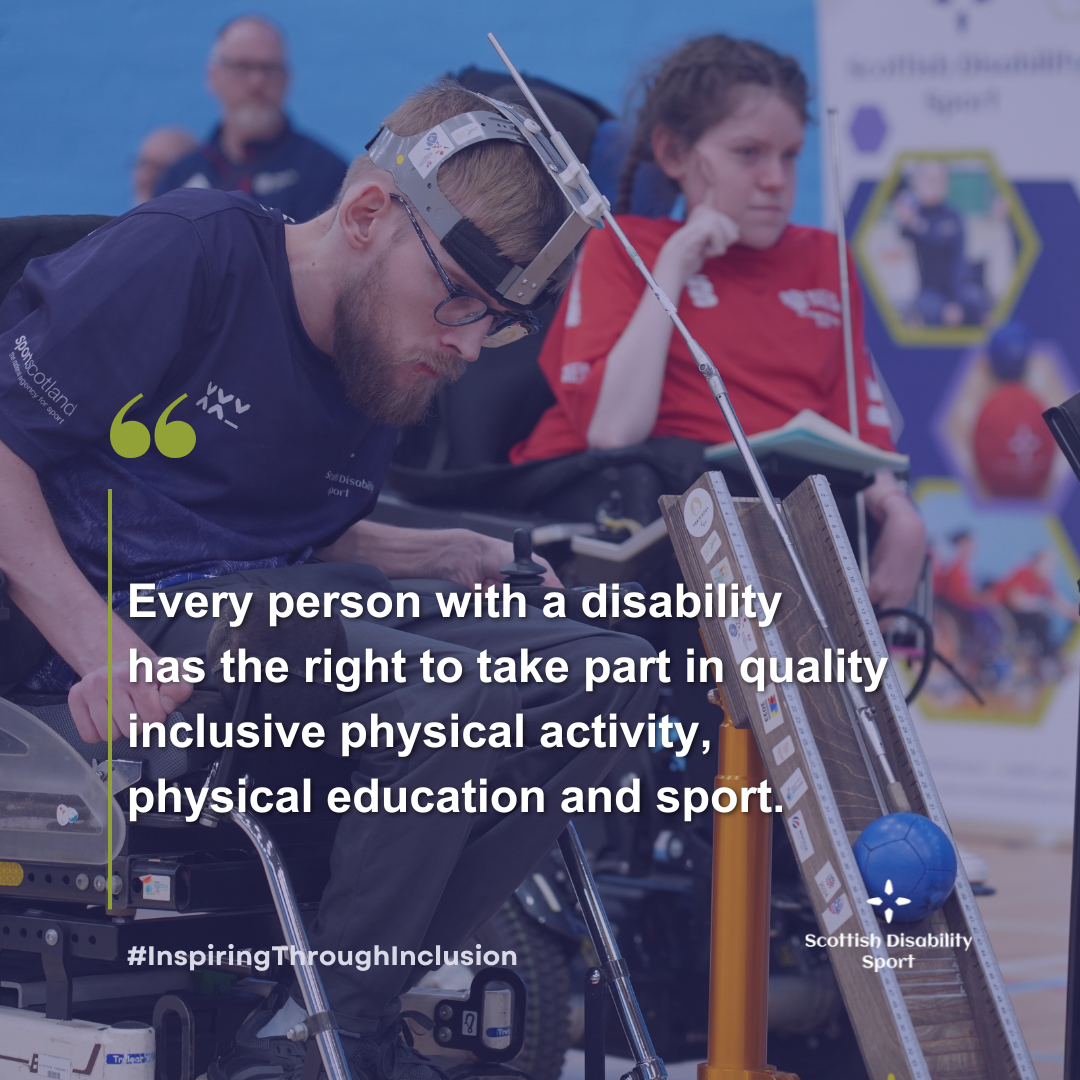
The SDS Call to Action sets out a practical, proactive and engaging framework to change this. At its core is a simple principle: People with disabilities must have the same right to be active as everyone else as laid out in the United Nations Convention on the Rights of People with Disabilities. This means embedding inclusion across the whole sporting and physical activity system, not treating it as an optional add‑on, a “nice to do” or a short‑term project.
First, we must address leadership and accountability. Inclusion cannot sit on the margins of government portfolios or be passed between agencies and left to fall between the cracks. The next Scottish Government should clearly assign responsibility for people with disabilities’ access to sport and physical activity to the sector as a whole, with measurable outcomes and transparent reporting. Without this, inequalities will continue to fall through the cracks. It may be too optimistic at this juncture to ask for a Cabinet Secretary post in sport alone, but it shouldn’t be beyond the realms of reason for it to achieve a prominence alongside a complementary portfolio area such as Culture and for those incumbents to work with those in the Equalities portfolio amongst others to engender better outcomes for people with disabilities.
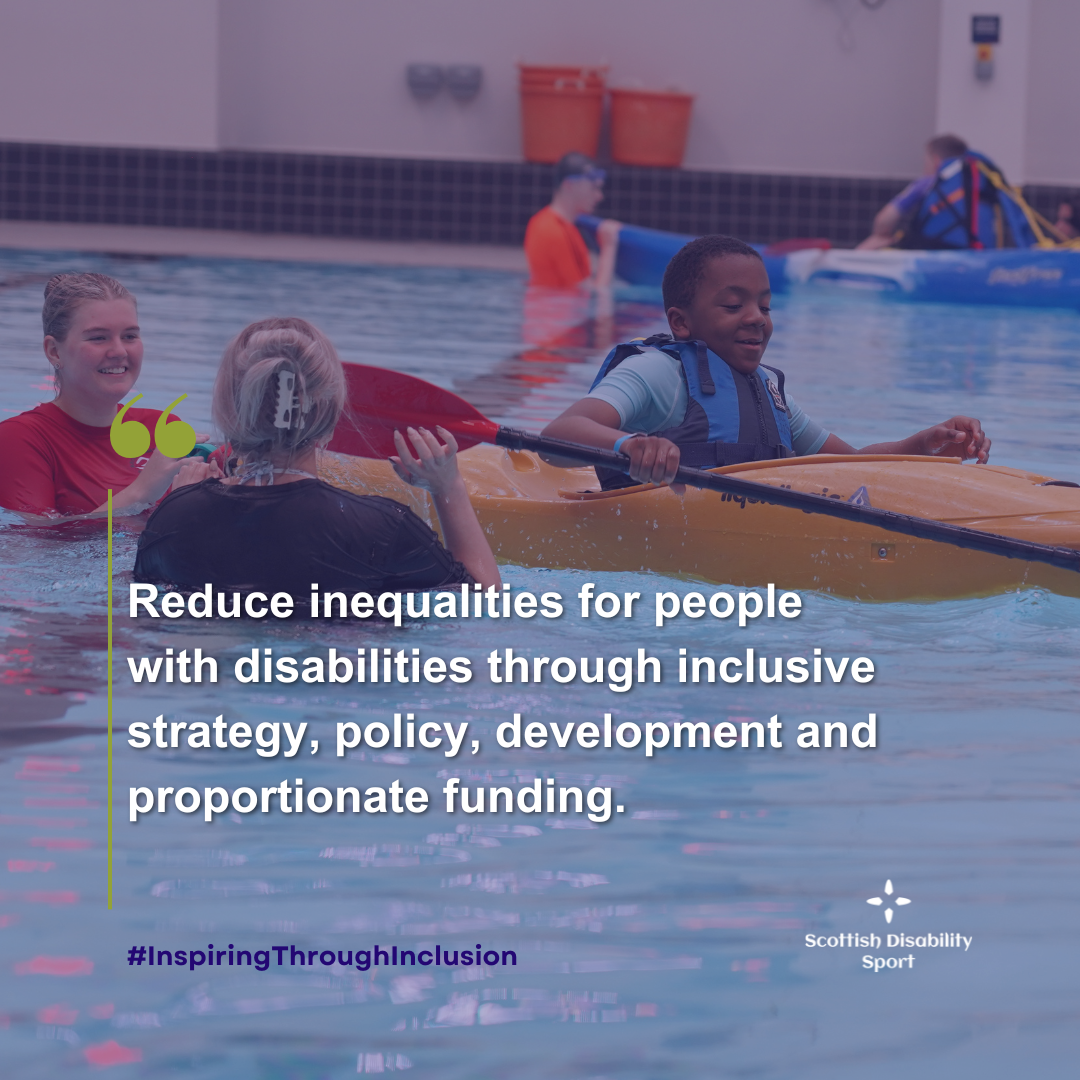
Investment matters. Inclusive provision costs money—whether that is adapting facilities, supporting specialist equipment, or ensuring clubs have the support they need to welcome disabled participants. Yet inclusive investment is not an additional luxury; it is a preventative measure that saves costs across health and social care in the long term. Funding models must recognise this and provide sustainable, multi‑year support, particularly at local and community level where impact is greatest.
People and skills are key. Teachers, coaches, volunteers and staff want to do the right thing, but many lack confidence or training in inclusive practice. A strengthened national approach to workforce development is essential, ensuring inclusion and disability awareness are core components, not optional extras. This is about empowering people to say “yes” rather than defaulting to exclusion through uncertainty.
If all our trainee PE teachers, Primary teachers and sports coaches are educated in inclusive practice at source then by extension the chances of a better experience for people with disabilities at school or within community activity suddenly look more hopeful. The same is true for health and social care. Inactivity should be treated with the same weight as other harms such as smoking, drugs, alcohol and poor diet and suitable and appropriate activity (not just gym referrals with are not appropriate for many) must be prescribed and facilitated at every stage of a person’s care journey. From there, clear pathways to lifelong, sustained engagement should be straightforward and supported. Links between education, healthcare, local authorities, governing bodies of sport and third sector need to be joined up and systemic.
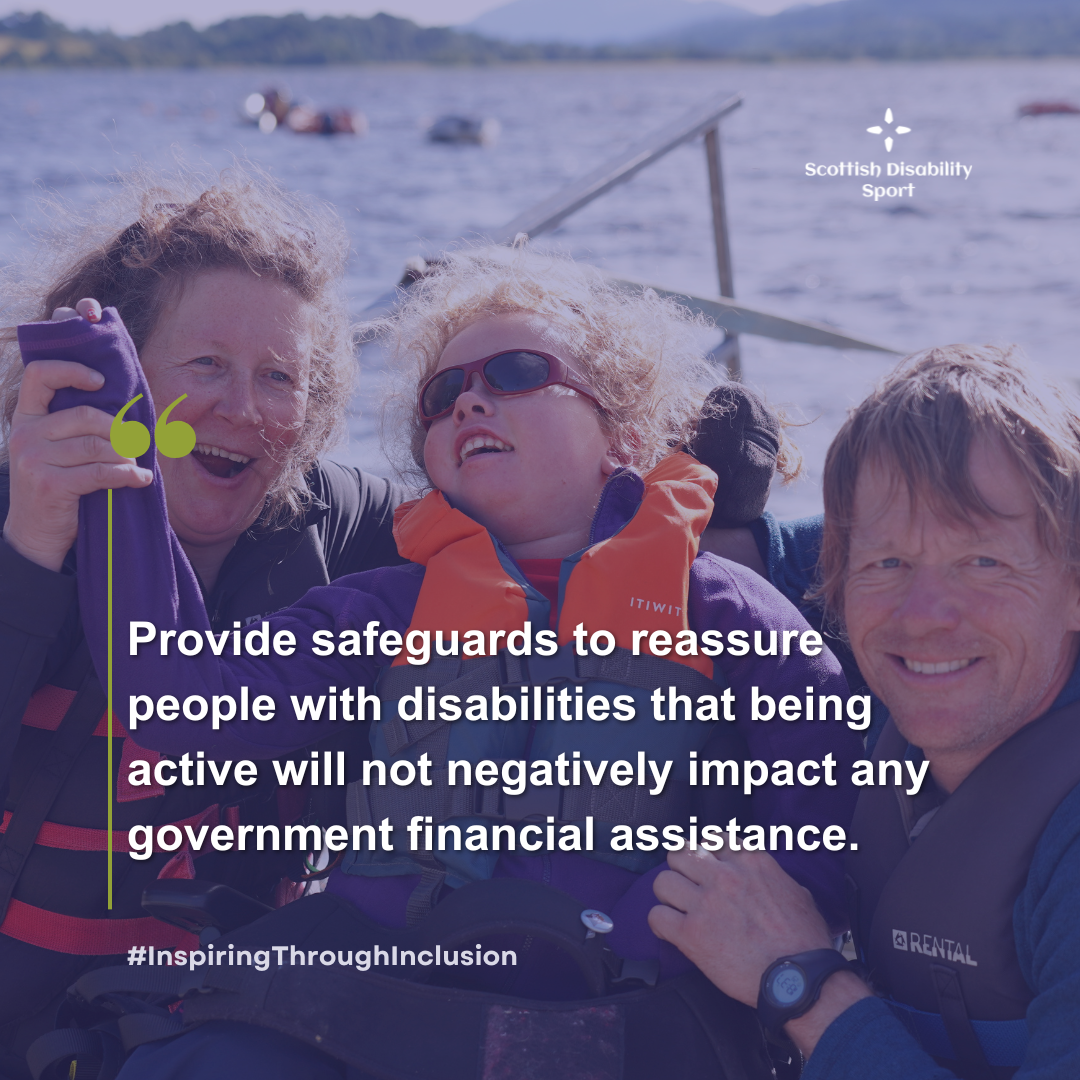
A major barrier that continues to be impactful for people with disabilities in Scotland is the lack of clear guidance and robust policy to reassure people with disabilities that being active will not affect their government financial support they rely on so heavily to just live. We are hearing anecdotally that the move from the UK system to Social Security System appears to have generally gone smoothly and on the face of it is a more compassionate and supportive system, however, more needs to be done to ensure people are not penalised for engaging in efforts to improve their health. Current benefit rules and systems can discourage participation and engagement in sport and physical activity. Although Self Directed Support is designed to prioritise choice and control, inconsistent implementation around accessing physical activity is limiting these choices. Physical activity should be seen as a critical and substantial need for individuals to allow them the freedom to pursue health and wellbeing gains. It has been proven that it can cost an average of £1100 a month more to have a disability than to not, clearly difficult choices need to be made for individuals for the most basic of needs before determining whether expensive sporting opportunities are accessible to them. This is why we back a mandated inclusive strategy where all bodies who receive any public funding ensure that they are accountable for providing affordable and accessible opportunities for people with disabilities and furthermore provide a discounted rate to participate.
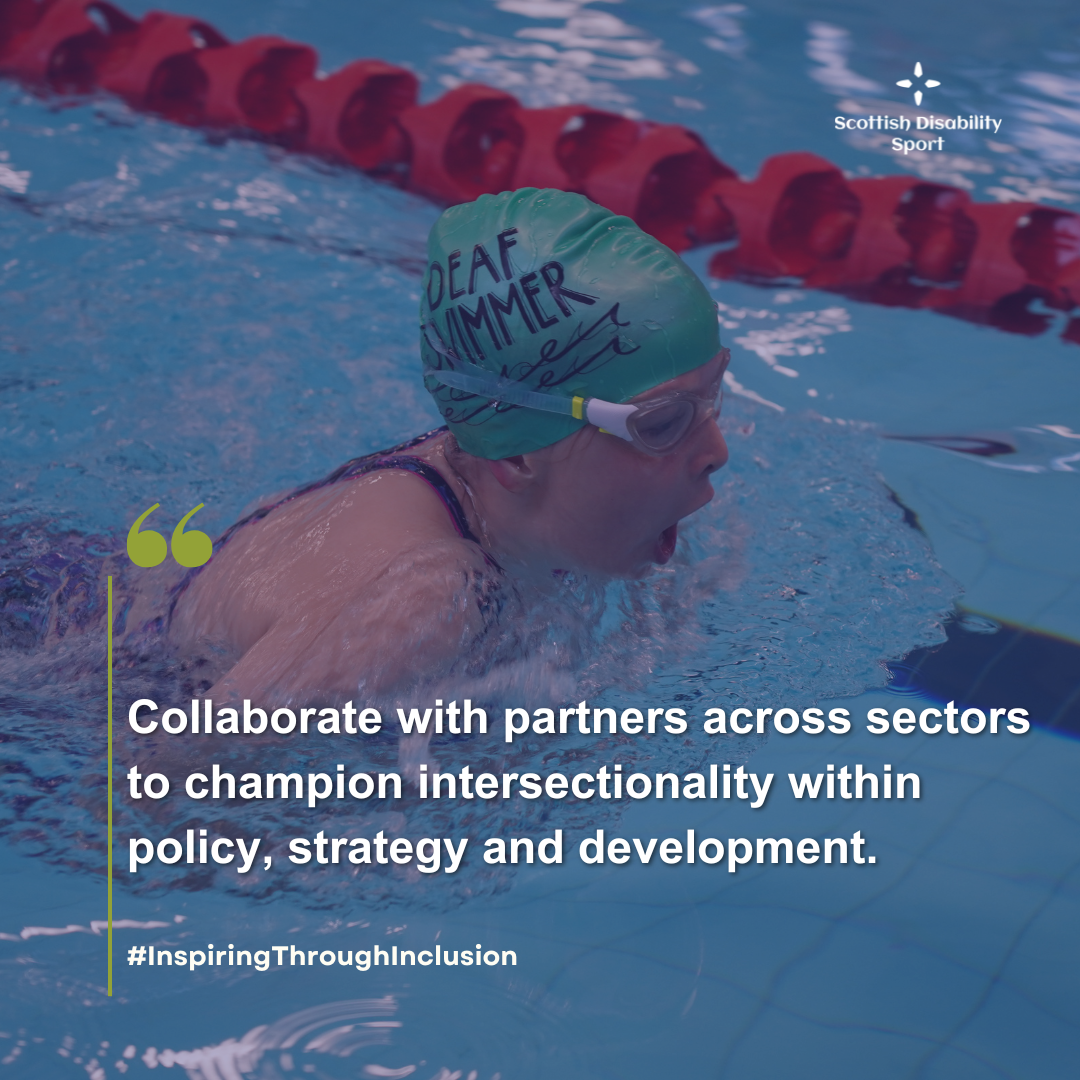
Finally, people with disabilities must be at the heart of decision‑making. Policies designed for People with disabilities too often fail because they are not designed with them. Co‑design is not a buzzword; it is a necessity. People with disabilities are experts in their own lives, and their voices must shape facilities, programmes and policy from the outset. At SDS we talk about taking an intersectional approach to inclusion. But what does this mean? Essentially, it means that we know that people are not made up of one characteristic alone, individuals have many identities – and these very identities can layer multiple and varied barriers to being active. One-size-fits-all approaches will often miss key needs. Collaboration with informed organisations, individuals and co-design will benefit future policy and planning.
This election presents a clear test. Parties across the political spectrum will talk about prevention, wellbeing and tackling health inequalities. The question is whether they are prepared to act when it comes to people with disabilities’ right to be active. Platitudes are not enough. What we need are clear pledges aligned with the SDS Call to Action, setting out how the next government will reduce barriers, close participation gaps and deliver lasting change.
Scotland has the talent, the evidence and the infrastructure to lead the way on inclusive sport. What has been lacking is the political will to treat this issue with the urgency it deserves. If we get this right, the rewards will be felt far beyond sports halls, playing fields and leisure centres—improving health, strengthening communities and affirming the value of people with disabilities’ participation in every aspect of Scottish life.
As voters prepare to make their choice, I urge them to ask a simple question of those seeking office: Will you turn inclusion into action? For People with disabilities across Scotland, the answer cannot be postponed any longer.
The SDS four-point Call to Action Graphics are available to download via the links below:
- Plan to Include
- Deliver an inclusive whole system approach
- A benefits and social care system that equips individuals to be active
- Champion intersectionality through a person-centred approach
Tomorrow, Mark will take us through a summary of each of the main party manifestos and what they mean for people with disabilities in Scotland.


You must be logged in to post a comment.